Ask your data.
Get answers you can
trust, verify, and interact
AI-assisted self-service analytics that lets anyone explore data with natural language. Grounded in governed metrics, verifiable logic, and your team's shared definitions.
-
1 You ask, AI answers in chat
-
2 AI spots a gap, proposes a fix
-
3 You approve, the semantic layer improves
AI suggests 3 improvements
User settled on 90 days without repeating order in this chat. Define it once for every future answer.
Your semantic layer
When discussing repeat customers, share the current average gap to check if the definition still fits.
Region sits only on Orders, so customer cuts need a join. APAC is 41% of revenue — model it once.










Chat about your data
Ask in plain English. Get clarification when you're ambiguous, root-cause analysis when you need to dig deeper, and a narrative when you're ready to share. Data exploration that feels like a real conversation.
Explore AI capabilitiesHi — what would you like to explore?
I’ll break down July and August revenue by a few dimensions to see what drove the drop.
Revenue fell across every product category, each by roughly 11% — so no single product line is responsible.
By region it is concentrated: APAC accounts for 82% of the drop — $5.4k of the $6.6k total.
So this isn’t a category problem — it’s an APAC problem. That could mean fewer APAC customers, or the same customers spending less. Worth checking APAC customer activity next.
Since January revenue has grown 105%, averaging 7.1% a month. August broke the run, falling 11% versus July.
📊 Key insight- January $38.2k → July $57.8k, then $51.2k in August 11%, recovered by September.
- August: APAC drove 82% of the drop — 24.8k → 19.4k 22%; no other region gave up more than $0.6k.
- APAC: not churn — losses flat at 310 avg 306. Gains fell to 1,240 36% against a 1,938 average.
Why APAC stopped acquiring in August — two things to check:
- Marketing — ad spend paused, or a campaign that lapsed in early August.
- Market — regional seasonality, or a competitor pulling demand away.
AI you can actually verify
Every AI-generated answer is transparent.
See the reasoning in plain English, then inspect the underlying query logic
- so you never have to take the AI's word for it.
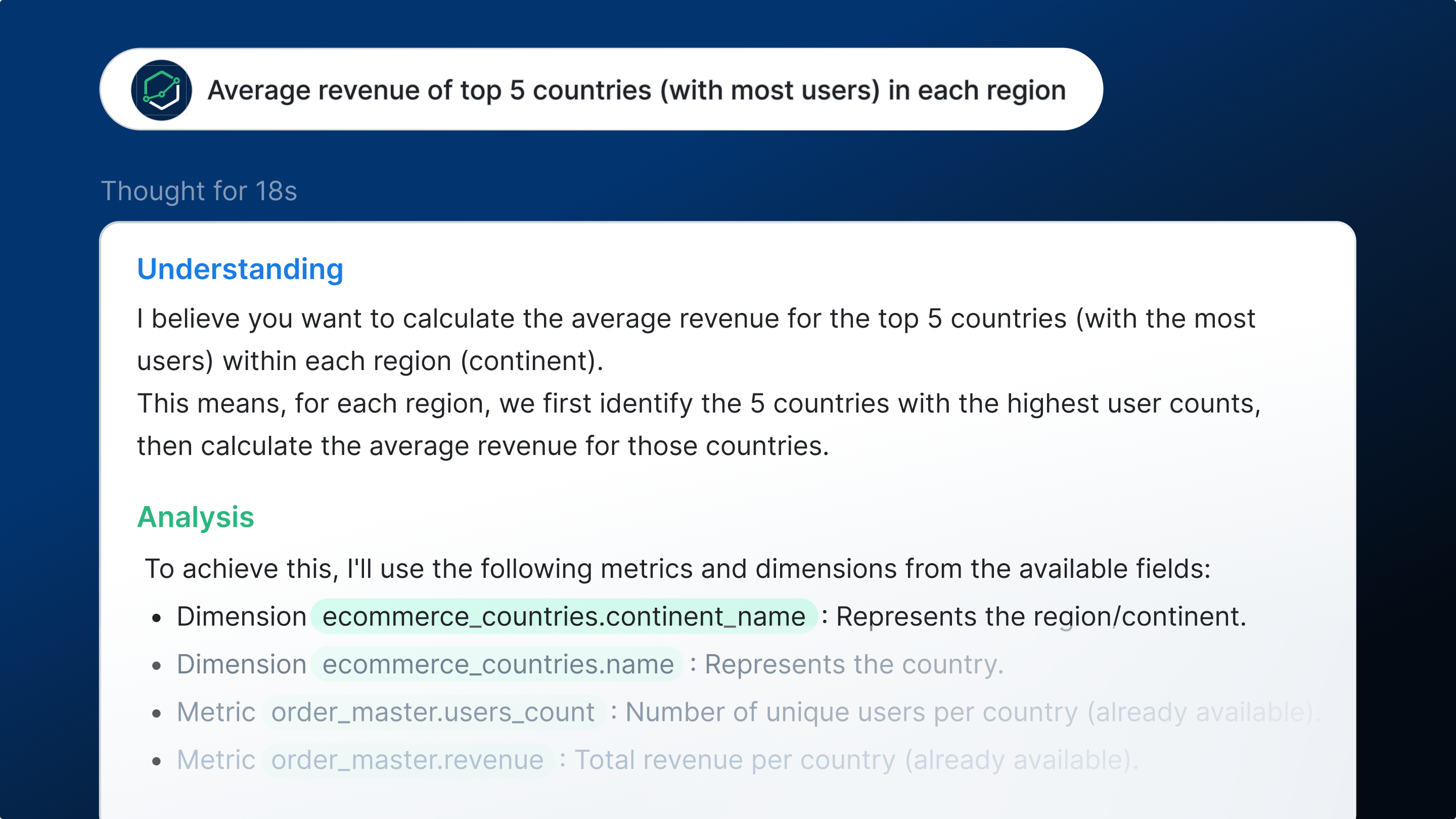
Plain-language explanations
AI walks through its reasoning step by step, so you can check it before you trust the answer.
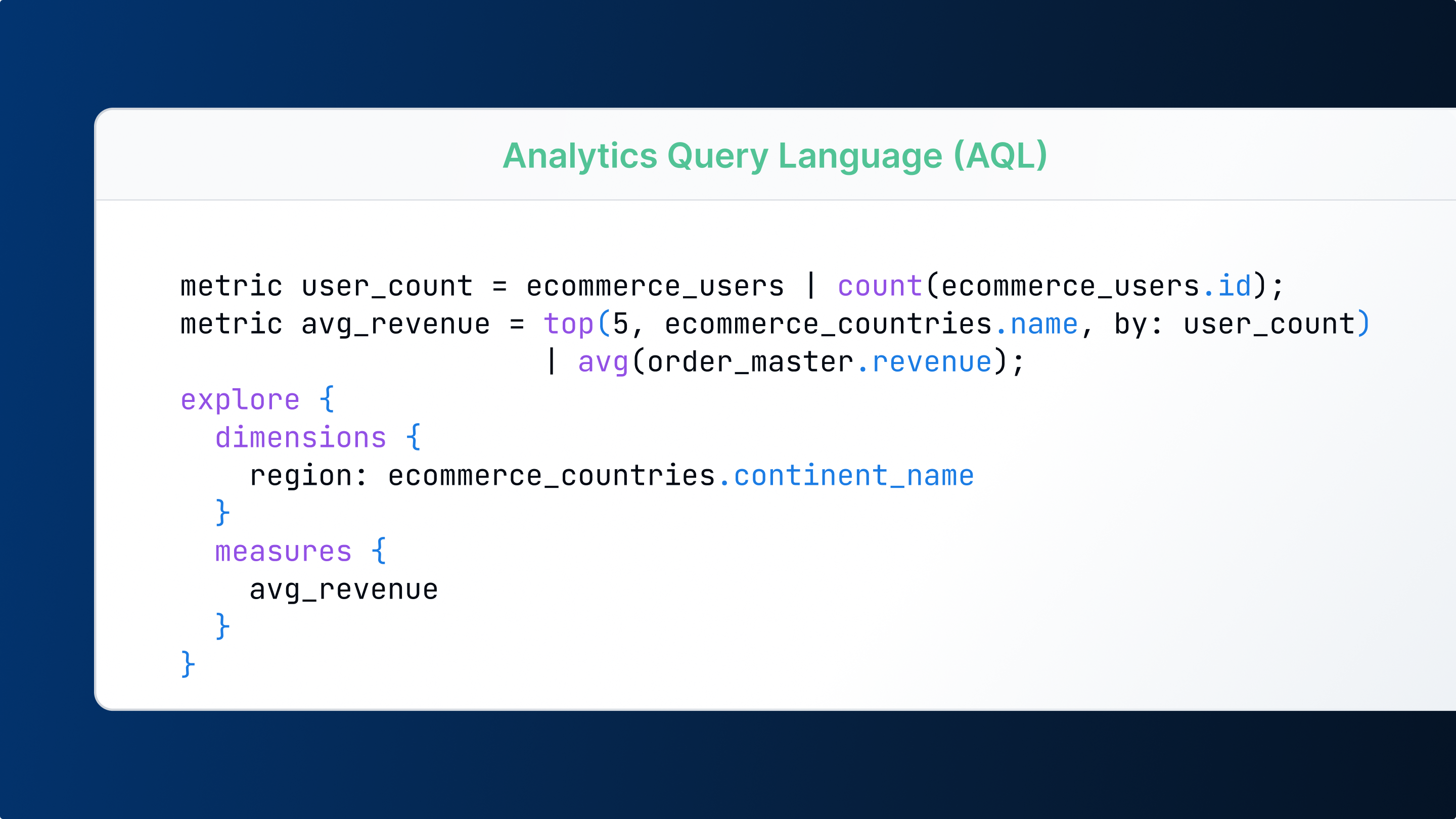
Readable query logic
See the query as a readable, high-level formula (not raw SQL), so you can verify exactly how every metric is calculated. Compact enough for a human to review in seconds.
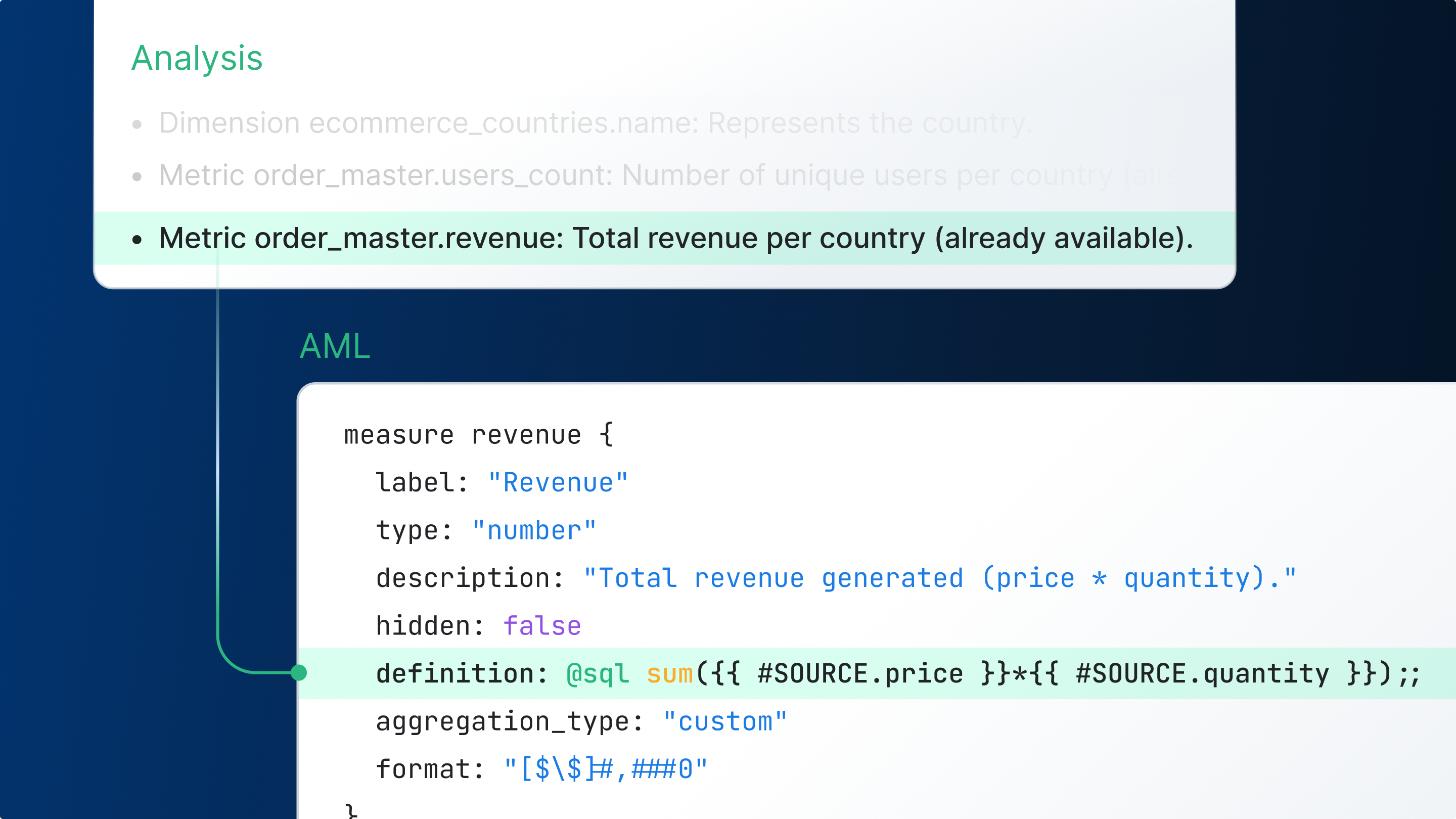
Governed by your definitions
The AI prioritizes your team's endorsed metrics and composes new ones from definitions you already have. You can trace every answer back to its source.

A query language built for AI reasoning
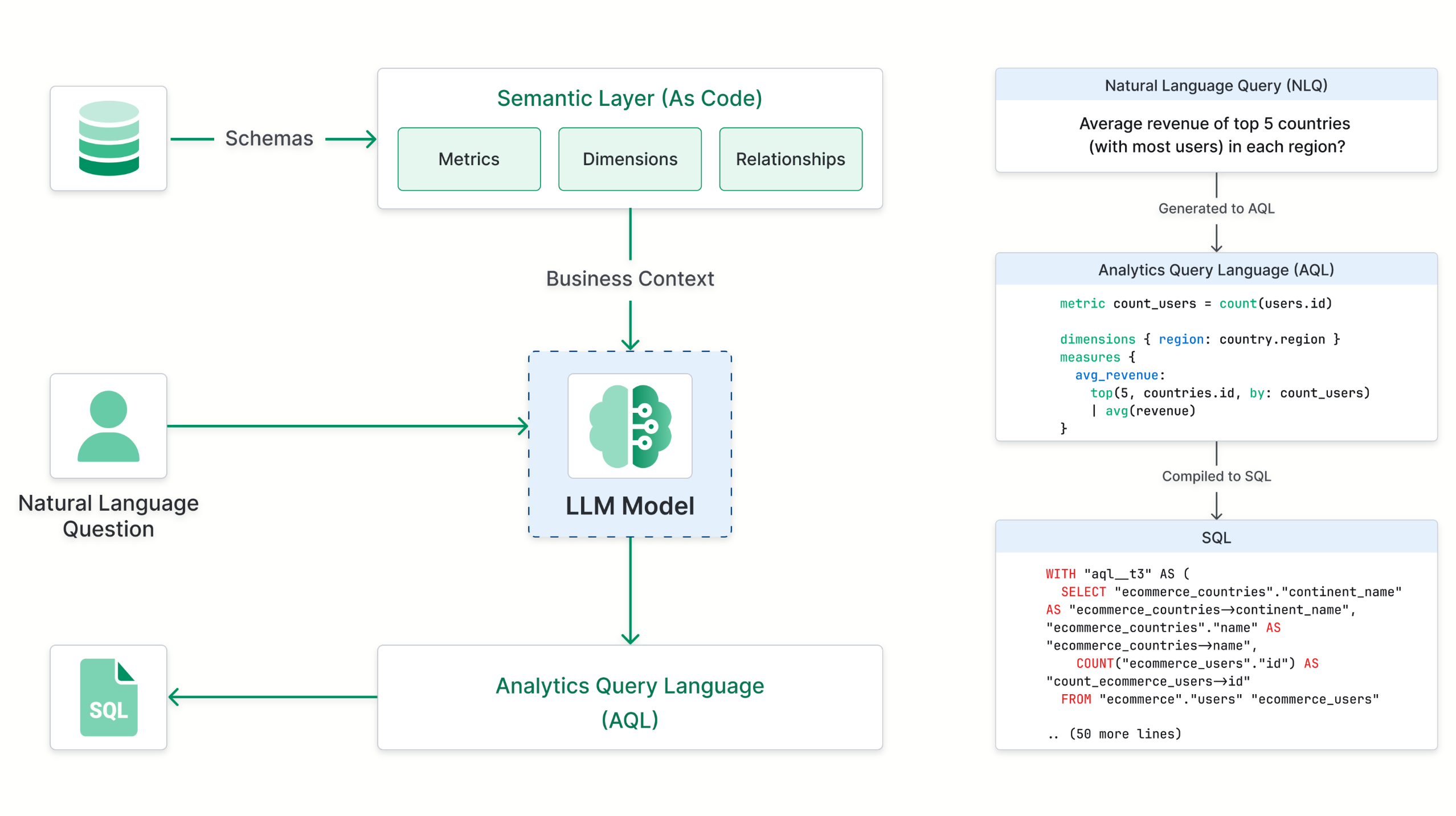
Instead of translating natural language directly to SQL, the AI generates AQL,
a high-level, composable analytics language.
You get answers that are more reliable, more readable, and handle more.
AQL is compact and high-level, making it easy to read and verify the AI's logic, with no 200-line SQL queries to decipher.
The AI works in a high-level language, so it never fights database-specific syntax or SQL gymnastics. The AQL compiler handles translation deterministically.
Break complex operations into modular pieces and combine them like building blocks. Prebuilt functions handle period comparisons, running totals, nested aggregations, and more.

AI works natively with Holistics - because
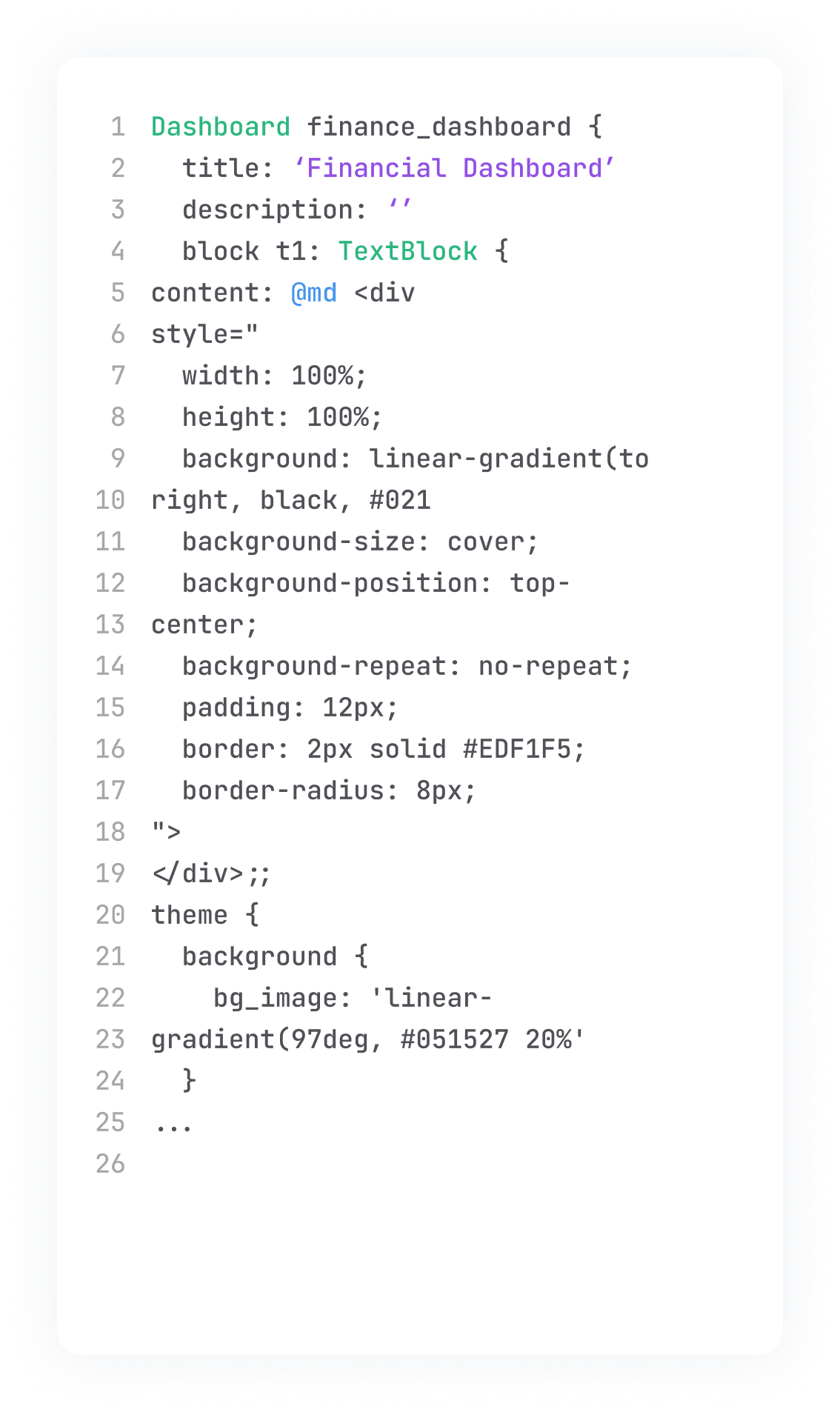
all analytics artifacts are code: Models as Code Datasets as Code Metrics as Code Dashboards as Code
Models, datasets, metrics, and dashboards are all defined as text-based code.
This means AI tools can read, generate, and modify your analytics definitions.
Version control and governance come free.
Use Cursor, Claude Code, or your preferred AI coding tool to develop models and dashboards faster than ever.
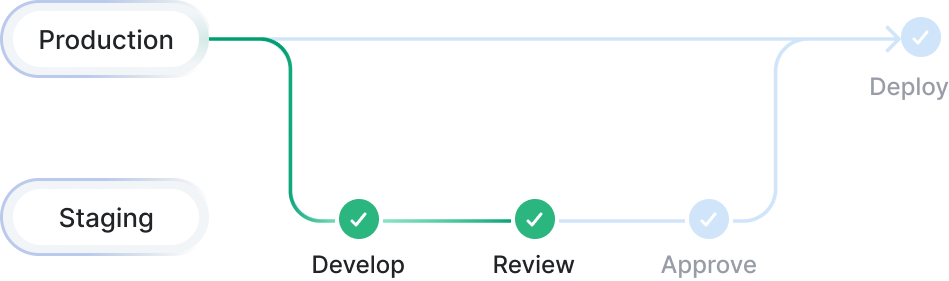
Every change is tracked. Review diffs, manage branches, and enforce governance workflows, the same way engineering teams manage code.
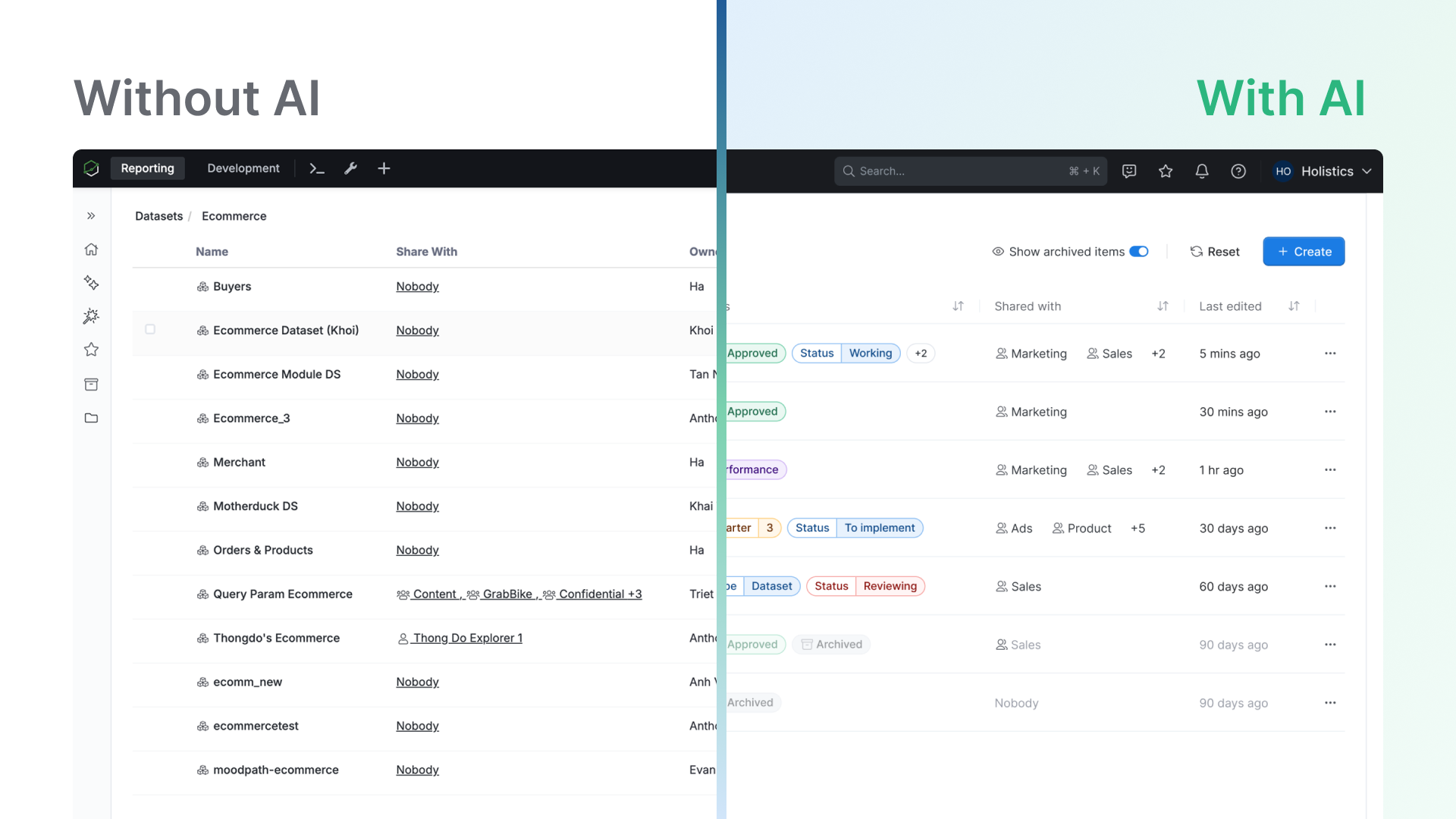
AI writes field descriptions, dataset summaries, and tag descriptions. Your semantic layer stays documented with zero manual work.
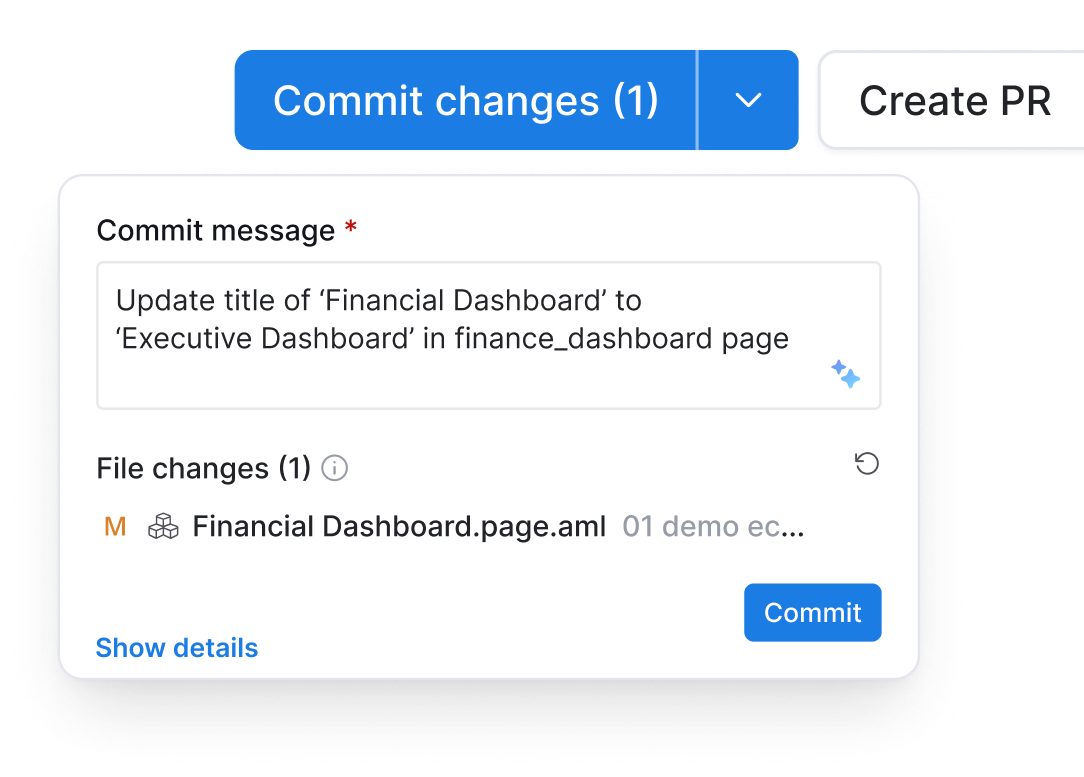
Auto-generate commit messages and PR descriptions. Focus on the analytics work, not the paperwork.

Teach AI about your business
AI draws on your existing models and definitions from the start. Then go further:
customize its behavior at the organization, team, or individual level with programmable context.
Rich context by default
AI automatically draws from your semantic models, metric definitions, dashboards, and conversation history. No manual setup required to get accurate answers immediately.
Organization-level instructions
Define your business background, operational knowledge, and response preferences in a central config - so AI speaks your company's language and follows your standards.
Dynamic per-user context
Customize AI behavior per team or user with programmable logic. Marketing sees marketing data, purchasing sees purchasing data. Automatically.
Bring AI analytics everywhere
Connect to your existing tools or embed AI-powered analytics
directly into your product. No AI stack required.
Holistics MCP Server
Use Holistics' querying power inside any external AI tool via the Model Context Protocol. Your AI assistants can query governed metrics natively.
Embedded AI Chat
Give your customers AI-powered analytics inside your product. No need to build your own AI - embed the Ask AI experience directly.
Frequently asked questions
How to activate Holistics AI?
How does Holistics AI use my data?
Rest assured, these providers or contractors are not permitted to use your data for training their models, and we do not utilize the AI inputs and results from our customers to enhance our service.