Best Looker Alternatives in 2026: A Practitioner Comparison
In this article, we’ll explore top Looker alternatives, including Holistics, Sisense, Sigma Computing, Lightdash, and Thoughtspot. We’ll break down their features, pricing, pros, and cons so you can make a more informed decision.
Looker is an enterprise BI platform built around LookML, a proprietary semantic modeling language that defines metrics, dimensions, and business logic centrally. It pioneered the "model once, use everywhere" approach to business intelligence and remains one of the most governed BI tools available.
Teams look for Looker alternatives for three recurring reasons:
- Cost. Looker's Standard plan starts at $35,000–$60,000/year for 10 Standard + 2 Developer users. Enterprise contracts average ~$150,000/year (per Vendr analysis of 355 deals). Per-user add-ons range from $400/year (Viewer) to $1,665/year (Developer). (Read more: How much does Looker actually cost?)
- Semantic ceiling. LookML handles first-order metrics well, but complex calculations — running totals, percent-of-total, nested aggregations — often require derived tables or table calculations that break the governed layer. When follow-up questions escape the semantic layer into analyst tickets or spreadsheet workarounds, self-service fails.
- Operational overhead. LookML projects become file-heavy and specialist-driven as complexity grows. Simple changes require editing LookML, validating, and redeploying, slowing the data team's iteration speed.
This comparison evaluates 8 Looker alternatives across the capabilities that matter most when migrating from or replacing Looker: semantic modeling, self-service exploration, governance, AI assistance, visualization, and pricing.
What should a Looker alternative offer?
A strong Looker alternative must preserve what Looker gets right: governed semantic modeling and metric consistency, while solving the friction points that drive teams to evaluate alternatives.
Semantic modeling layer
Looker's core strength is LookML: a centralized layer where metrics and dimensions are defined once and enforced across all reports. Any alternative should offer an equivalent semantic layer. Without it, metric definitions proliferate inconsistently across dashboards, eroding trust in the data.
BI tools with native semantic layers include Holistics (AMQL/AML), Looker (LookML), Lightdash (dbt YAML), Omni Analytics, and Sigma Computing. Incumbent tools like Tableau, Metabase and Power BI lack a centralized semantic layer in their standard offerings (Metabase can integrate with Cube.dev; Power BI uses DAX measures which are model-specific, not platform-wide).
The key differentiator is semantic expressiveness : can the modeling layer handle complex metric patterns (nested aggregations, period-over-period, percent-of-total) natively, or do they require workarounds that break governance? This is the "semantic ceiling", the point where the governed layer stops answering questions and logic leaks into one-off solutions.
Self-service exploration
Self-service analytics fails when users cannot find data, cannot trust it, or cannot shape it into the answer they need. A Looker alternative should offer:
- Drag-and-drop exploration within governed boundaries
- One-click common calculations (period-over-period, running totals) without writing code
- Cross-filtering, drill-down, and drill-through for follow-up questions
- AI-assisted exploration — natural language querying against the semantic layer
In Looker, common calculations like period-over-period often require custom LookML logic or derived tables. Tools like Holistics provide these as built-in, one-click operations.
Governance and version control
Governance covers role-based access control (RBAC), row-level security, audit trails, and usage monitoring. For teams that value engineering discipline, Git-based version control is critical (the ability to track changes, review pull requests, and roll back mistakes).
Looker and Holistics both offer native Git integration. Lightdash inherits Git workflows through dbt. ThoughtSpot, Sigma, and Metabase provide internal versioning but not full Git-based workflows.
AI-powered assistance
AI in BI falls into two categories:
- AI for exploration: Natural language querying, auto-generated visualizations, anomaly detection. Holistics AI, ThoughtSpot Sage and Looker's Gemini lead here.
- AI for modeling: Automatic relationship detection, semantic label generation, and inline modeling suggestions. This requires a strong semantic layer foundation, without defined business logic, AI has nothing reliable to query against.
Example of AI-powered exploration
Visualization and dashboarding
Looker's visualization options are functional but limited compared to tools like Tableau or Power BI. If visualization flexibility is a priority, evaluate chart types, customization depth, and dashboard layout options. Holistics' Canvas Dashboards offer narrative-style layouts. Sigma Computing provides spreadsheet-like interactivity. ThoughtSpot focuses on AI-generated visuals.
Pricing
Looker's role-based pricing (Developer/Standard/Viewer tiers) makes broad organizational access expensive. Compare alternatives on:
- Per-user cost across all roles (some tools charge the same rate regardless of role)
- Minimum contract commitments
- Embedded analytics pricing (per-user vs. usage-based)
- Hidden costs (infrastructure requirements, add-on features)
What are the best Looker alternatives?
1. Holistics, code-based semantic layer with governed self-service
Holistics is the most architecturally similar Looker alternative, offering a code-based semantic modeling layer (AML/AMQL) with analytics-as-code workflows, Git version control, and governed self-service exploration.
How Holistics compares to Looker:
| Capability | Looker | Holistics |
|---|---|---|
| Semantic layer | LookML (proprietary) | AML/AMQL (code-based, with static typing and module system) |
| Complex metrics | Requires derived tables for nested aggregations | AMQL handles running totals, percent-of-total, nested aggregations natively |
| Dashboard authoring | Split between LookML dashboards and user-defined dashboards | Unified — both visual and code editing, plus full dashboard-as-code |
| Git integration | Native | Native, with CI/CD across models, datasets, and dashboards |
| Self-service | Explore interface; common calculations require LookML | Drag-and-drop with 1-click period-over-period, cross-filtering, drill-through |
| AI assistance | Gemini (natural language + LookML generation) | AI-assisted exploration within governed semantic layer |
| Embedded analytics | Embed SDK with programmatic iframe control | Built-in embedding with white-labeling, row-level permissions, dashboard templates |
Pricing: Usage-based. Free trial available. Paid plans start from $800/month. Standard plan: $1,000/month (annual) for 10 users, $12.50/month per additional user. Every user gets full platform access — no role-based tier discrimination.
Compared to Looker's pricing: A 12-user Holistics Standard deployment costs ~$12,300/year. The equivalent Looker Standard deployment starts at $35,000–$60,000/year. Holistics is 65–80% less expensive for a comparable team size.
Best fit: Data teams at 50–500 person companies that want Looker-grade governance without Looker-grade overhead. Teams building customer-facing or embedded analytics. Organizations that value Git workflows and CI/CD in their BI stack.
Limitations: Learning curve for teams coming from GUI-based tools. Visualization polish is functional rather than flashy. Some advanced patterns (role-playing dimensions, cross-model calculations) might require extra modeling work.
Migration support: Holistics provides concept mapping documentation and a migration assistant for LookML views, dimensions, and measures. For example, SensorFlow migrated 45 dashboards and 124 data models from Looker to Holistics in two weeks.
2. Metabase, open-source BI for fast deployment
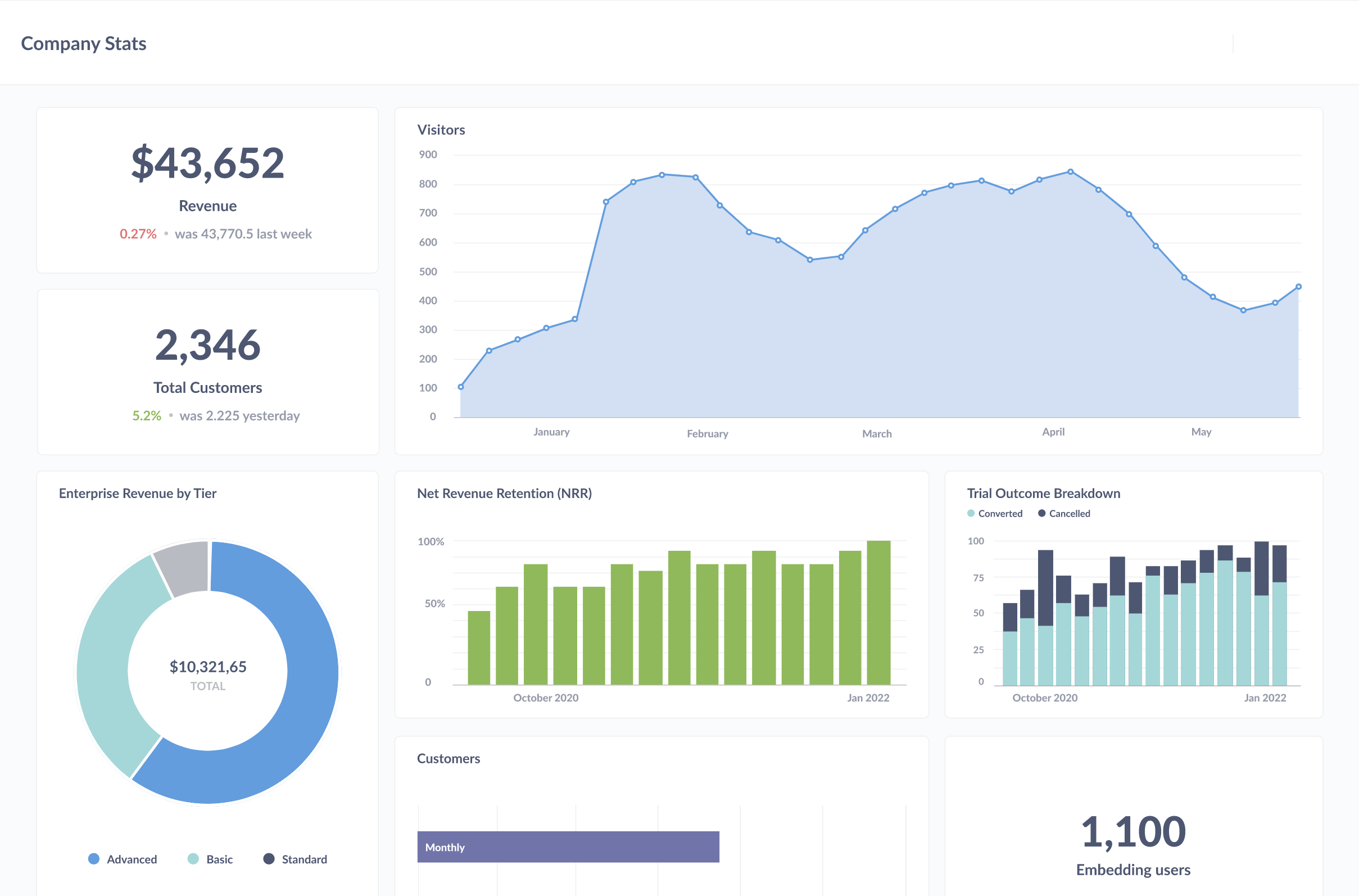
Metabase is an open-source BI tool built for simplicity. It connects directly to databases and lets users query data through a visual interface or SQL, with minimal setup and a shallow learning curve.
How Metabase compares to Looker:
Metabase takes the opposite approach to Looker: where Looker requires upfront semantic modeling, Metabase provides immediate access to data with almost no configuration. This makes Metabase faster to deploy but weaker on governance as organizations scale.
| Capability | Looker | Metabase |
|---|---|---|
| Semantic layer | LookML (centralized) | None natively (can integrate with Cube.dev) |
| Self-service | Governed exploration through Explores | Visual query builder + SQL |
| Governance | Enterprise-grade RBAC, row-level security | Basic in open-source; enterprise features in paid edition |
| Version control | Git-native | No code-based version control |
| Embedded analytics | Embed SDK, advanced | Basic embedding available |
Pricing: Free for open-source self-hosted version. Cloud-hosted plans start from $85/month. Enterprise edition with advanced governance available at custom pricing.
Best fit: Startups and small teams that need a BI tool immediately with minimal budget. Engineering and product teams that are comfortable with SQL. Organizations deploying their first BI tool before they need full governance.
Limitations:
- No centralized semantic layer means metric definitions can drift as the organization grows.
- No Git-based version control so tracking who changed what is difficult. Performance degrades with large datasets (Metabase sends live queries to the database).
- Limited self-service beyond pre-built dashboards.
3. Power BI, enterprise BI for Microsoft-centric organizations
Microsoft Power BI is one of the most widely adopted BI platforms globally, deeply integrated with the Microsoft ecosystem (Azure, SQL Server, Office 365, Excel). It offers strong visualization capabilities and a mature data modeling layer through DAX.
How Power BI compares to Looker:
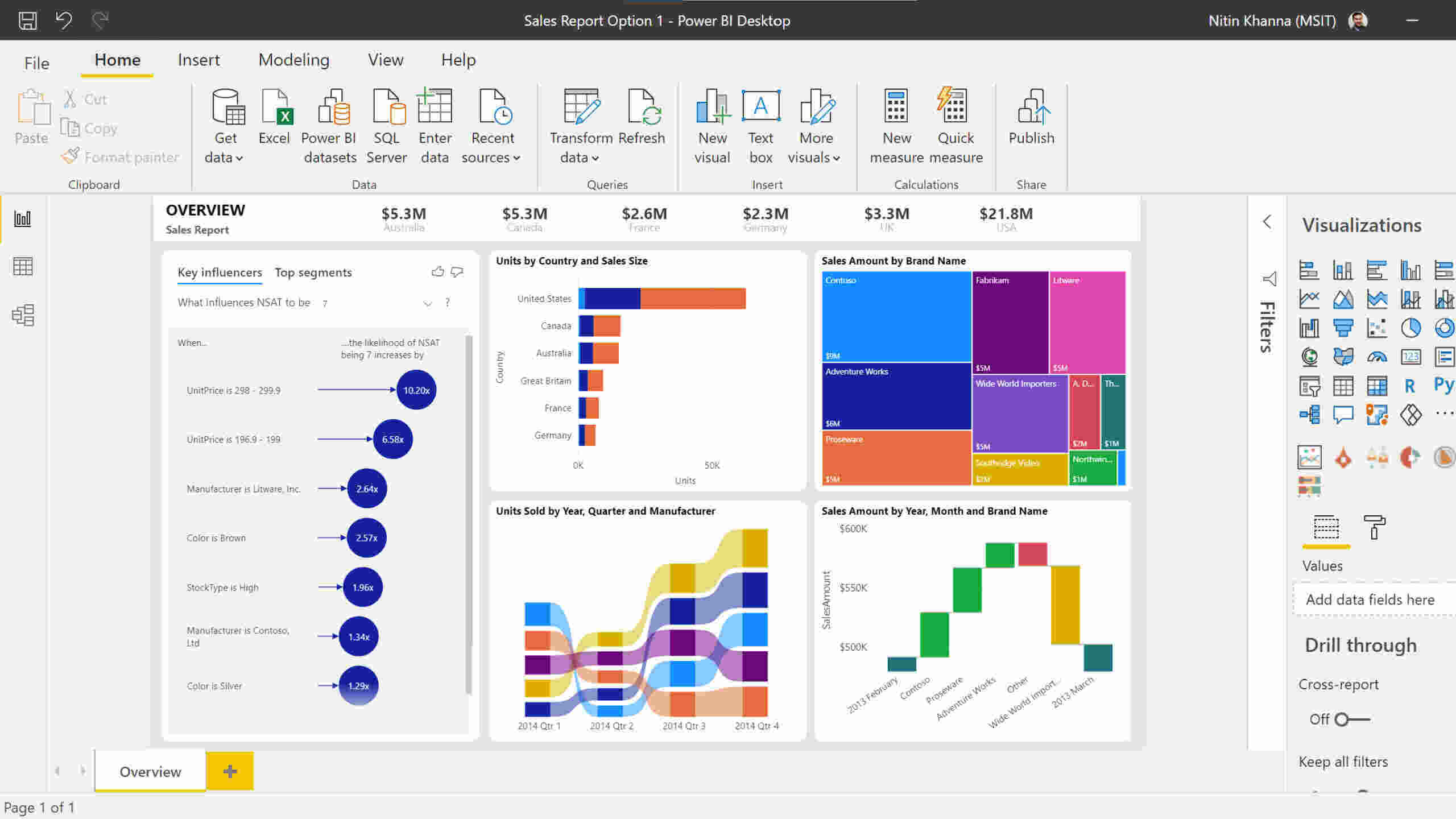
Power BI and Looker serve d ifferent architectural philosophies. Looker is built around a centralized semantic layer with code-based governance. Power BI is built around desktop authoring (Power BI Desktop) with a DAX-based modeling layer and cloud publishing (Power BI Service).
| Capability | Looker | Power BI |
|---|---|---|
| Semantic layer | LookML (centralized, platform-wide) | DAX measures (model-specific, not platform-wide) |
| Authoring model | Web-based, collaborative | Desktop-based (PBIX files), publish to cloud |
| Version control | Git-native | Limited; PBIX file-based (Git integration in preview) |
| Self-service | Explore interface | Report builder + Q&A natural language |
| Visualization | Functional, limited customization | Rich visualization library with custom visuals marketplace |
| Ecosystem | Google Cloud-aligned | Microsoft 365, Azure, Excel integration |
Pricing: Free plan available. Power BI Pro: $10/user/month. Power BI Premium: from $20/user/month (Premium Per User) or $4,995/month (Premium capacity). Often bundled with Microsoft 365 E5 licenses.
Best fit: Organizations already invested in the Microsoft ecosystem. Teams where Excel is the primary analytical tool and Power BI is a natural upgrade. Enterprises with existing Microsoft licensing that includes Power BI Pro.
Limitations:
- Multi-developer workflows are difficult because PBIX files can create merge conflicts when multiple people edit simultaneously.
- DAX has a steep learning curve.
- Data models can only be authored on Windows machines (Power BI Desktop is Windows-only).
- Not suitable for Google Cloud or non-Microsoft data warehouse users.
4. ThoughtSpot, AI-powered search-driven analytics
ThoughtSpot is a self-service analytics platform built around natural language search. Users type questions (e.g., "total sales in Europe last quarter") and get instant visual answers without writing SQL or navigating pre-built dashboards.
How ThoughtSpot compares to Looker:
ThoughtSpot and Looker differ fundamentally in how users interact with data. Looker requires users to navigate pre-configured Explores; ThoughtSpot lets users type questions in plain language. ThoughtSpot acquired Mode Analytics in 2023, adding SQL-based analysis for technical users.
| Capability | Looker | ThoughtSpot |
|---|---|---|
| Primary interface | Explore-based navigation | Natural language search + AI (Sage/GPT) |
| Semantic layer | LookML (deep, proprietary) | Worksheet-based modeling (simpler, less expressive) |
| AI assistance | Gemini | ThoughtSpot Sage (GPT-powered), SpotIQ automated insights |
| Self-service | Governed exploration | Search-driven; users ask questions directly |
| Visualization | Basic charts | AI-generated visuals, Liveboards |
Pricing: Starts at $1,250/month. Average annual contract: ~$140,000 (per Vendr data). Enterprise pricing with custom quotes.
Best fit: Organizations with many non-technical users who need ad-hoc answers fast. Enterprises willing to invest in data modeling upfront to power accurate search results. Companies where "answer quick questions" is the primary self-service use case.
Limitations:
- Requires well-structured data schemas as search accuracy depends on how well the data is modeled.
- Complex multi-step analyses are harder than in SQL-native tools.
- Enterprise pricing is a barrier for smaller organizations.
5. Sigma Computing, spreadsheet-like interface on cloud warehouses
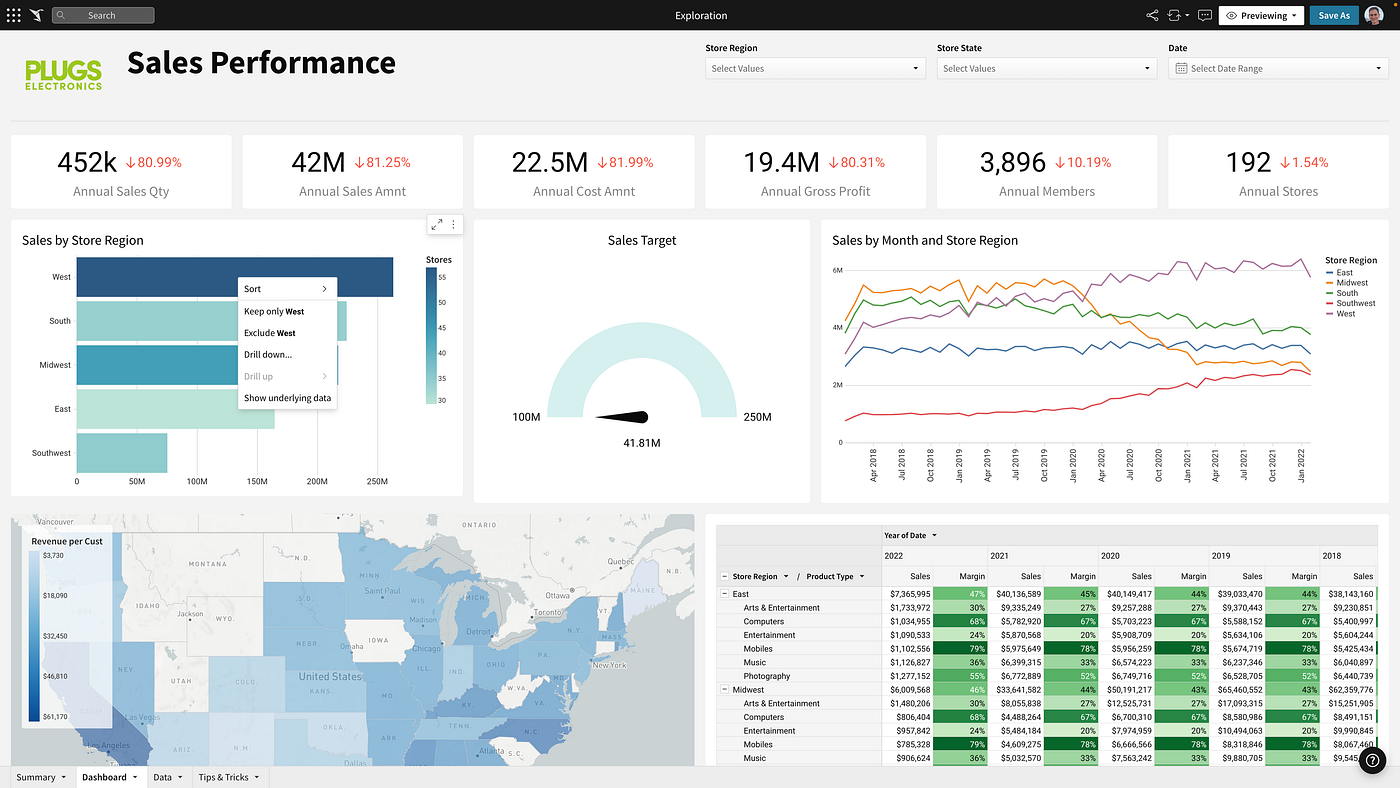
Sigma Computing combines SQL capabilities with a spreadsheet-like interface, allowing users to interact with live cloud data warehouse data (Snowflake, BigQuery, Redshift) using familiar Excel-like patterns.
How Sigma compares to Looker:
Sigma takes a different approach to self-service: instead of a semantic layer + exploration UI, Sigma puts a spreadsheet interface directly on the data warehouse. This makes it immediately familiar to Excel users but trades some of Looker's governance rigor for accessibility.
| Capability | Looker | Sigma Computing |
|---|---|---|
| Primary interface | Explore-based | Spreadsheet-like (Excel patterns) |
| Semantic layer | LookML (deep) | Metrics layer (evolving) |
| Collaboration | Web-based | Real-time multi-user editing |
| Data analysis | SQL/LookML | Spreadsheet formulas + SQL + Python |
| Visualization | Basic charts | Charts + interactive data tables |
Pricing: Base platform fee of ~$30,000/year (per community discussions), with unlimited Viewer licenses. Additional $1,000/year per Developer/Explorer role.
Best fit: Organizations with Excel-heavy cultures that want to move to cloud-native analytics. Teams where real-time collaboration on datasets is a priority. Data analysts who prefer spreadsheet workflows over code-based modeling.
Limitations:
- Visualization options are more basic than Tableau or Power BI.
- Data transformation and preparation capabilities are less mature than LookML or Holistics' AML.
- Governance features are evolving but not yet as deep as Looker's.
6. Lightdash, open-source, dbt-native BI
Lightdash is an open-source BI tool that connects directly to dbt projects, using dbt's YAML definitions for metrics and dimensions. It is purpose-built for teams that have already invested in dbt for data transformation.
How Lightdash compares to Looker:
Lightdash and Looker share a philosophical similarity — both believe in code-based semantic modeling. The difference is where the modeling lives: Looker uses proprietary LookML; Lightdash uses dbt's open-source YAML files.
| Capability | Looker | Lightdash |
|---|---|---|
| Semantic layer | LookML (proprietary) | dbt YAML (open-source) |
| Deployment | Cloud (Google-managed) | Self-hosted (free) or Lightdash Cloud |
| Version control | Git-native | Git-native (through dbt) |
| Self-service | Explore interface | Exploration UI on dbt metrics |
| Embedded analytics | Embed SDK (advanced) | Limited embedding capabilities |
Pricing: Open-source (free to self-host). Cloud-hosted plans start at $600/month. Enterprise pricing available.
Best fit: dbt-first data teams that want a BI layer extending their existing workflow. Startups and mid-size companies that value open-source flexibility and Git-native workflows. Teams where analytics engineers are the primary dashboard builders.
Limitations:
- Visualization options and UI polish are still maturing.
- Limited embedded analytics capabilities.
- Mobile experience is limited.
7. Qlik Sense, associative analytics engine
Qlik Sense uses a proprietary associative engine that lets users explore data relationships across all data sources without pre-defined queries or joins. This approach enables dynamic discovery of connections that traditional SQL-based tools might miss.
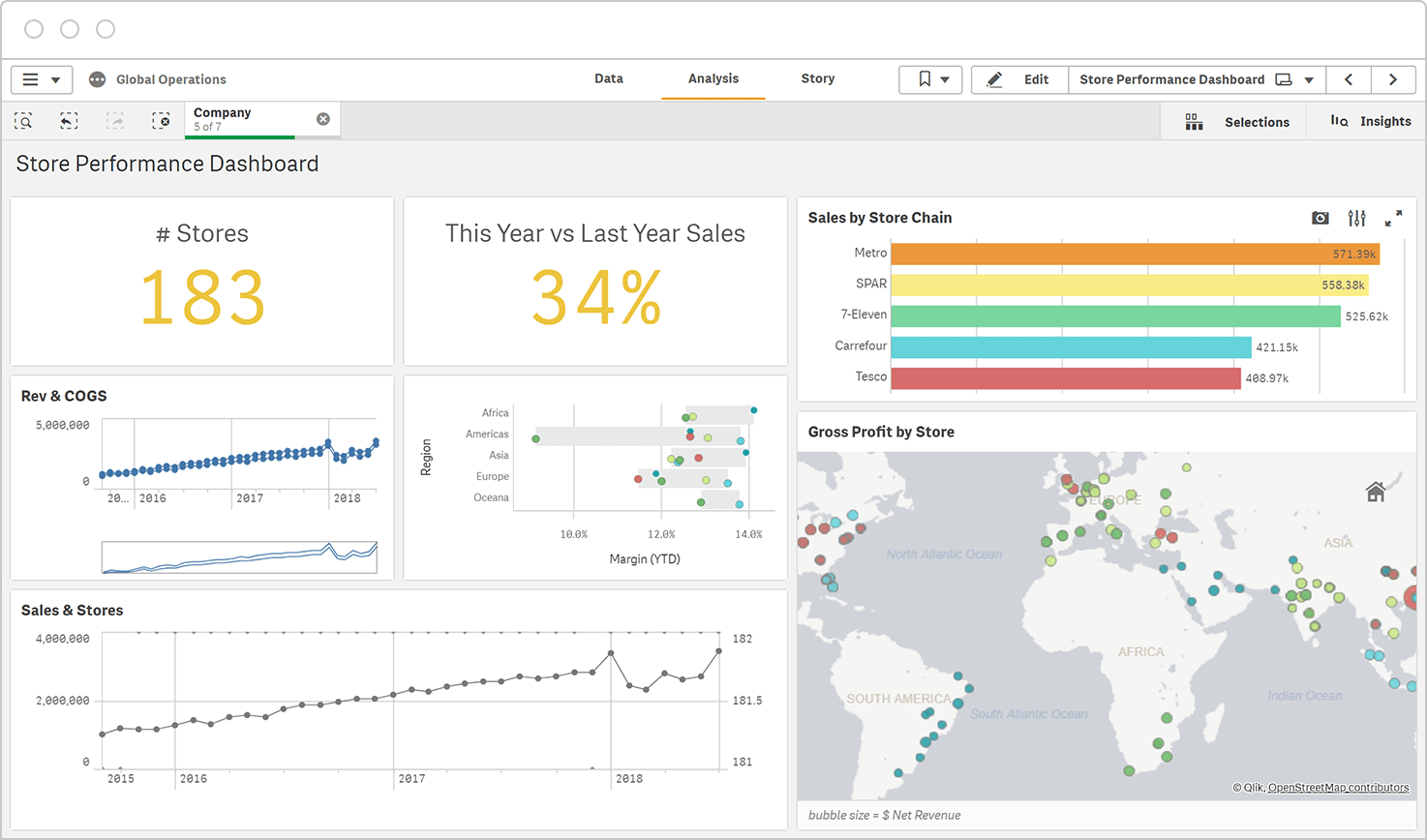
How Qlik Sense compares to Looker:
Qlik and Looker represent fundamentally different analytics philosophies. Looker enforces a structured semantic layer; Qlik lets users explore data associations freely. Qlik is stronger for ad-hoc discovery; Looker is stronger for governed, consistent reporting.
| Capability | Looker | Qlik Sense |
|---|---|---|
| Data model | Semantic layer (LookML) | Associative engine (in-memory) |
| Self-service | Governed exploration | Free-form associative exploration |
| Governance | Strong (centralized definitions) | Moderate (centralized management hub) |
| Mobile | Basic | Strong mobile-first apps |
Pricing: Qlik Sense Business: from $30/user/month. Qlik Sense Enterprise: custom pricing based on organization size.
Best fit: Organizations that prioritize ad-hoc data discovery and exploration over governed metric reporting. Teams with complex, multi-source data environments. Companies that need strong mobile analytics capabilities.
Limitations:
- Non-SQL-based modeling layer limits integration with modern data stack tools.
- Token-based pricing model can be confusing.
- Performance can slow with very large datasets.
- Less suited for teams that need strict metric governance.
8. Sisense, embedded analytics platform
Sisense is positioned as an "Analytics Platform as a Service" (AnPaaS), targeting product teams that want to embed dashboards and data experiences directly into SaaS applications. It competes most directly with Looker in embedded analytics use cases.
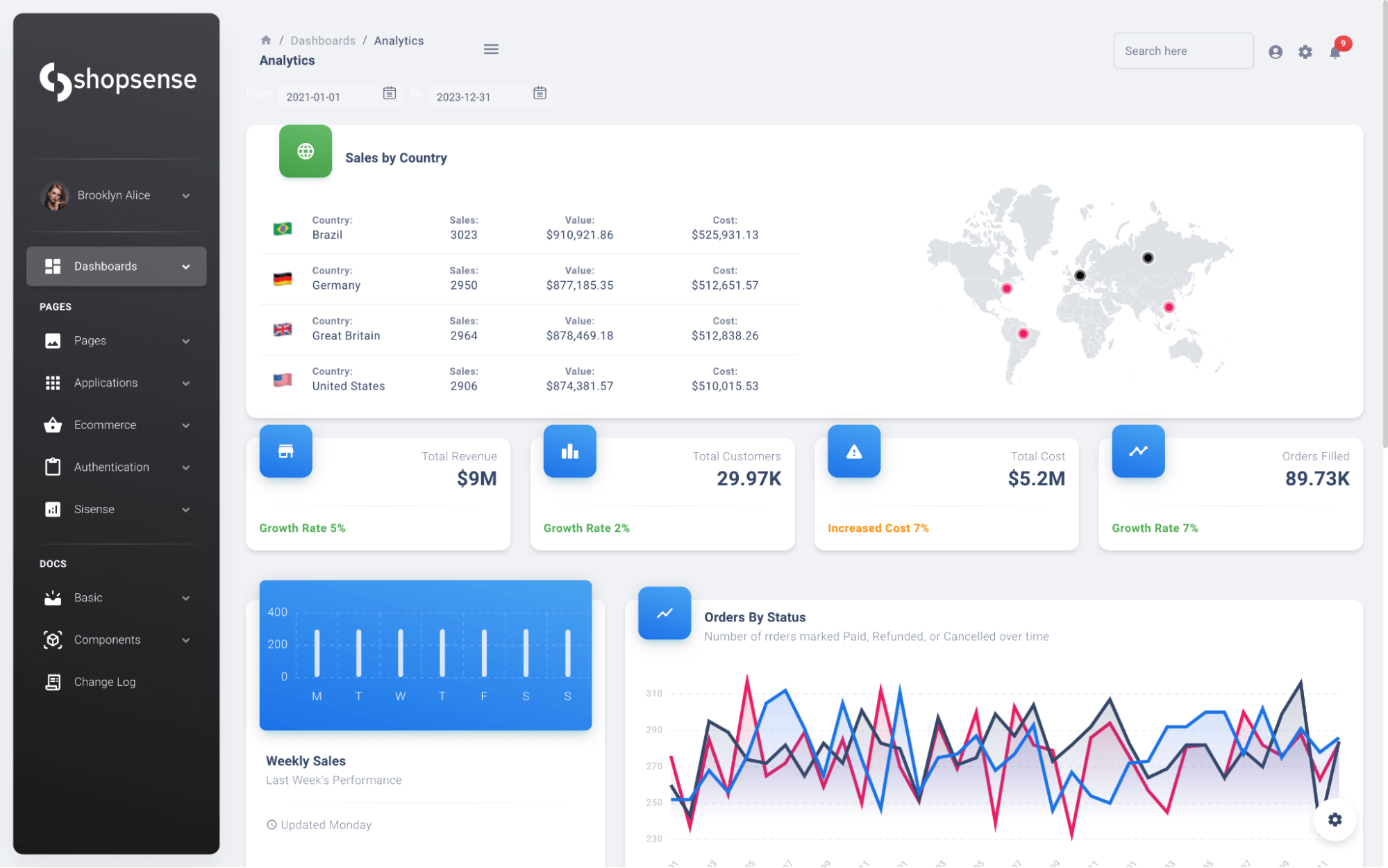
How Sisense compares to Looker:
Both Sisense and Looker offer embedded analytics, but they approach it differently. Looker embeds through its SDK with programmatic iframe control. Sisense provides a more turnkey embedded solution with its own in-memory engine (ElastiCube) for query performance.
| Capability | Looker | Sisense |
|---|---|---|
| Primary use case | Internal BI + embedded | Embedded-first analytics |
| Data engine | Live queries to warehouse | ElastiCube (in-memory) + live connections |
| Embedded approach | SDK with iframe events | Turnkey embedding with widgets |
| Governance | LookML semantic layer | GUI-driven data modeling |
| Version control | Git-native | Limited |
Pricing: Not publicly listed. Based on available research, pricing starts at approximately $21,000/year. Custom quotes required. (Read more: Sisense pricing details).
Best fit: Product teams embedding analytics into customer-facing SaaS applications. Organizations that want a turnkey embedded solution without extensive data engineering. Teams willing to manage ElastiCube infrastructure.
Limitations:
- ElastiCube infrastructure requires server resources, space, and ongoing management. Setup and configuration time can be significant.
- No transparent public pricing, requires sales engagement.
- Limited Git-based version control and analytics-as-code capabilities.
Read more: We tested 10 Sisense alternatives for embedded analytics (Pros & Cons)
How do Looker alternatives compare?
| Tool | Semantic Layer | Self-Service | Git/Version Control | AI Features | Starting Price | Best For |
|---|---|---|---|---|---|---|
| Holistics | AML/AMQL (code-based) | Governed drag-and-drop | Native Git + CI/CD | AI exploration | $800/mo | Looker-grade governance at lower cost |
| Metabase | None (Cube.dev optional) | Visual query + SQL | None | Basic | Free / $85/mo | Small teams, fast deployment |
| Power BI | DAX (model-specific) | Report builder + Q&A | Preview | Copilot | $10/user/mo | Microsoft-centric enterprises |
| ThoughtSpot | Worksheet-based | NL search + AI | None | Sage (GPT) | $1,250/mo | Non-technical users, ad-hoc queries |
| Sigma | Evolving | Spreadsheet-like | Limited | AI analysis | ~$30K/yr base | Excel-heavy organizations |
| Lightdash | dbt YAML | dbt-native exploration | Git (via dbt) | Limited | Free / $600/mo | dbt-first data teams |
| Qlik Sense | Associative engine | Free-form exploration | Limited | AI insights | $30/user/mo | Ad-hoc discovery |
| Sisense | GUI-based | Embedded widgets | Limited | AI analytics | ~$21K/yr | Embedded analytics for SaaS |
How to choose a Looker alternative
The best Looker alternative depends on what you need to preserve and what you need to fix:
- If you want Looker's semantic layer and governance but at lower cost and with faster iteration: Holistics is the closest architectural match, with stronger complex metric handling (AMQL) and 65–80% lower pricing.
- If you need something simple and fast for a small team: Metabase deploys in hours and is free to self-host. You will outgrow it if you need governance or metric consistency.
- If your organization is Microsoft-centric: Power BI is the natural choice, especially if bundled with your M365 license.
- If non-technical users need to ask ad-hoc questions: ThoughtSpot's natural language search is the fastest path from question to answer.
- If your team is Excel-heavy: Sigma Computing's spreadsheet interface will feel immediately familiar.
- If you already use dbt and want open-source: Lightdash extends your existing dbt workflow without a separate modeling paradigm.
- If you need embedded analytics for a SaaS product: Evaluate Holistics (code-based, AI-powered, transparent pricing) and Sisense (turnkey embedding, in-memory engine) based on your team's technical preferences.

Data Engineer turned Product; writes SQL for a living.